Context
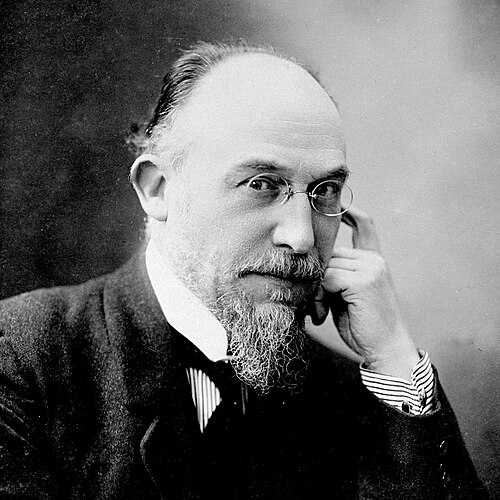
Satie wrote the three Gymnopédies in 1888, at the age of twenty-two. The title alludes to the gymnopaedia, ritual dances of ancient Sparta, and the tone is that of an ancient frieze: slow, bare melodies over a sway of seventh chords that lead nowhere. At a time when French music was under the spell of Wagner, it was a gesture of almost provocative simplicity.
Debussy, a friend of Satie, orchestrated the first and the third in 1897, with strings, harps and woodwind, and that version helped the pieces become known outside the Montmartre circle. Their mass fame came much later, in the second half of the twentieth century, when cinema, advertising and ambient music adopted them. The Gnossiennes continue that aesthetic shortly afterwards.
Score
- Source
- Mutopia Project
- Licence
- Public domain
Recording2024
Gregory Tait
- Duration
- 7 min
- Source
- Gregory Tait
- Archive
- Internet Archive
- Licence
- CC BY 4.0