Context
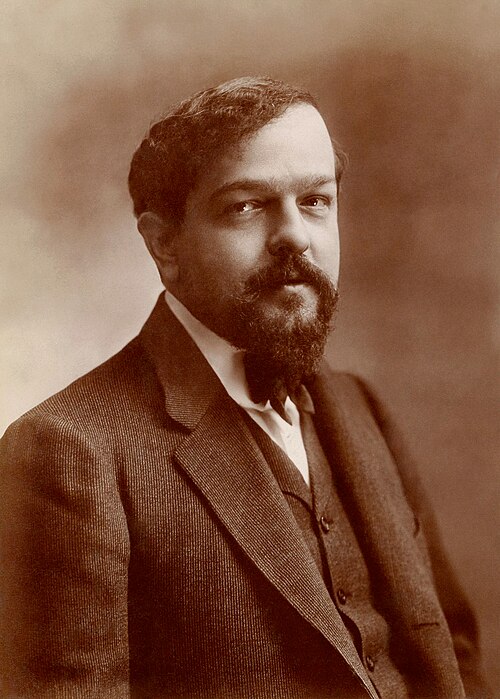
Debussy started from Stéphane Mallarmé’s eclogue, published in 1876, in which a faun, on waking on a hot afternoon, tries to recall whether the nymphs he desired were real or a dream. He did not wish to narrate the poem but to evoke its atmosphere. The premiere, in Paris in December 1894, was so successful that it had to be repeated, and Mallarmé was pleased with the result.
The work begins with a solo flute that descends and ascends through a tritone, without accompaniment or clear pulse. From there, the reduced orchestra, without trumpets or trombones, with harps and antique cymbals, moves through harmonies that no longer seek to resolve. Many historians place the beginning of modern music here. In 1912 Nijinsky choreographed it for the Ballets Russes, with a scandal over its erotic ending.
Score
- Source
- Internet Archive
- Edition
- Paris : Jobert, 1922
- Licence
- Public domain
Philadelphia Orchestra, Leopold Stokowski (William Kincaid, flauta)
- Duration
- 9 min
- Source
- Transfer by Bob Varney
- Archive
- Internet Archive
- Licence
- CC BY 3.0
Recorded on 10 March 1927 (Victor 6696).