Context
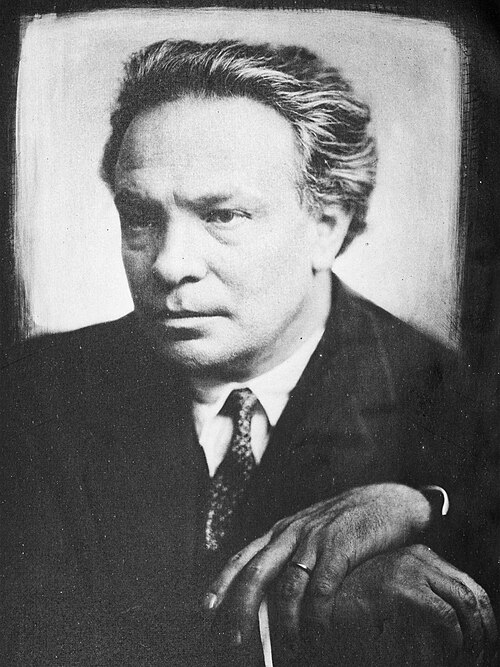
Respighi had settled in Rome in 1913 as a professor of composition, and this symphonic poem was his first great success, in 1916. It describes four fountains of the city at four moments of the day: that of Valle Giulia at dawn, the Triton Fountain in the morning, the Trevi at midday and that of the Villa Medici at sunset. The movements are linked without a break, and the music passes from pastoral evocation to the outburst of the brass in Neptune’s procession at the Trevi.
The Roman first performance of 1917 was followed by a more enthusiastic reception when Toscanini conducted it in 1918. With Pines of Rome (1924) and Roman Festivals (1928) it formed the so-called “Roman trilogy”, which shows the influence of Rimsky-Korsakov, with whom Respighi had studied in St Petersburg. This 1939 recording is by the New York Philharmonic and John Barbirolli.
New York Philharmonic, John Barbirolli
- Duration
- 15 min
- Source
- Transfer by Bob Varney
- Archive
- Internet Archive
- Licence
- Public domain (dedication)
Recording of 1939 (Victor).