Context
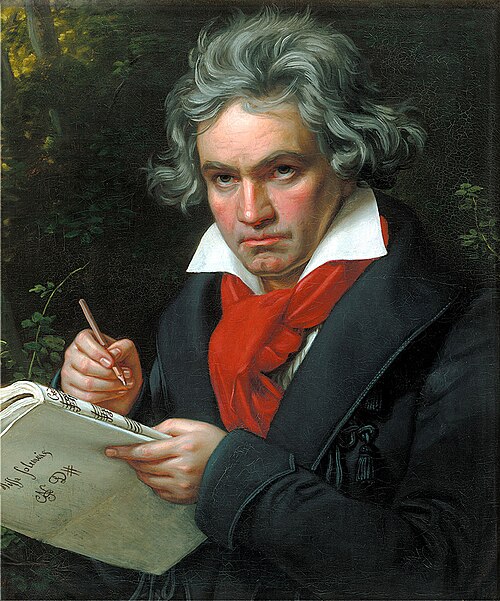
Beethoven gave it no opus number, a sign that he regarded it as a minor work, and published it in 1807 without a dedication. Nevertheless, these thirty-two variations have become one of his most played piano works outside the cycle of sonatas.
The theme, of only eight bars, rests on a descending chromatic bass, like that of Baroque chaconnes and passacaglias, and each variation, of the same length, keeps that harmonic frame while changing the figuration: arpeggios, octaves, trills, scales for the left hand or a central section in C major. The result is a compact catalogue of piano technique, much used as a study and competition piece. The return to the Baroque chaconne anticipates Brahms’s interest in those forms, and the key of C minor connects it with the dramatic Beethoven of the Fifth Symphony, composed in those same years.
Sergei Rachmaninoff
- Duration
- 8 min
- Source
- Onkel Greifenklau
- Archive
- Internet Archive
CD 5 of the complete Rachmaninoff recordings (RCA), transferred from the original 78s and LPs. Rachmaninoff plays Bach, Handel, Mozart, Beethoven, Chopin-Liszt, Schubert-Liszt, Mendelssohn, Schumann and Paderewski (1925-42).