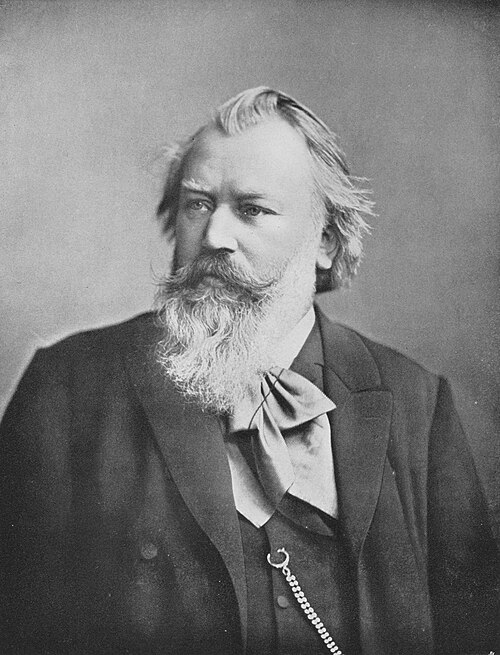
Context
Brahms wrote it during the summers of 1884 and 1885 at Mürzzuschlag, in Styria, and conducted the first performance himself at Meiningen on 25 October 1885 with the court orchestra directed by Hans von Bülow, with whom he later took it on tour. His friends received it with reservations on hearing it in a version for two pianos; the public, by contrast, accepted it quickly.
The finale is the most original part of the work: a passacaglia, a Baroque form, over an eight-bar bass derived from the closing chorus of Bach’s cantata Nach dir, Herr, verlanget mich (BWV 150). On it he builds thirty variations and a coda, with a central section in triple time and a solo flute of great starkness. It is his last symphony and the most explicit in its dialogue with early music: the second movement opens with a theme in the Phrygian mode and the third is the only true scherzo among his symphonies.
Czech National Symphony Orchestra
- Duration
- 41 min
- Source
- Musopen
- Archive
- Internet Archive
Recordings from the Musopen Kickstarter (2010): Czech National Symphony Orchestra, Musopen String Quartet, Shelley Katz and Paul Pitman. Musopen dedicated them to the public domain worldwide.