Context
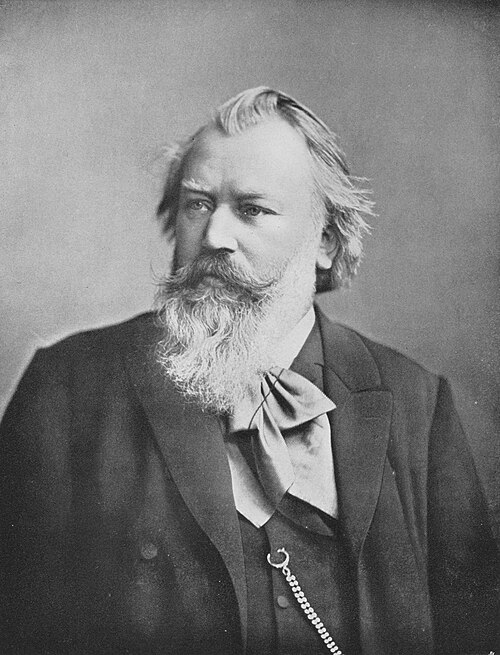
Brahms wrote it in the spring of 1882 at Bad Ischl, where he spent his summers, and he held it in particular esteem: he presented it to his publisher Simrock as one of his best works. Because of its light and amiable tone it is sometimes called the “Spring” Quintet. Like Mozart’s quintets, it uses two violas, which darken and thicken the middle register.
Its most original feature lies at the centre. Instead of a separate slow movement and scherzo, Brahms fuses the two into a single movement that alternates a Grave in C sharp minor with quick, light sections, so that the slow and the dance-like character follow one another over the same material. Part of that material comes from a sarabande and a gavotte he had written in 1854 with Baroque music as a model. The finale, a fugue combined with sonata form, confirms Brahms’s interest in old counterpoint.
Ensemble Materassi
- Duration
- 28 min
- Source
- OnClassical
- Archive
- Internet Archive
- Licence
- CC BY-SA 3.0