Context
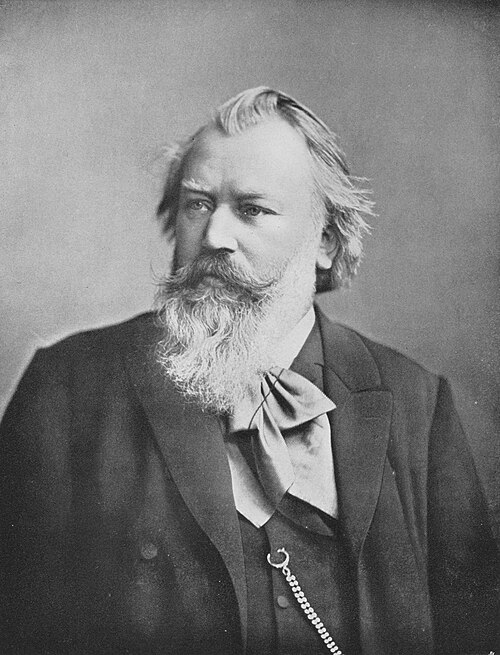
Brahms wrote these two pieces in the summer of 1879 in Pörtschach, on the shores of the Wörthersee, and dedicated them to Elisabeth von Herzogenberg, a pianist and one of his sharpest musical confidantes. He called them simply “Klavierstücke”; it was she who suggested the title of rhapsodies, which Brahms accepted reluctantly.
Despite the name, nothing in them is improvised. The first, in B minor and marked Agitato, is the longer: two stormy outer sections, in sonata form, enclose a backwater in B major with a nocturnal air, the key in which the coda also ends. The second, in G minor, is more compact and follows a conventional sonata form. In both the home key is slow to assert itself, which gives the openings an unstable, almost ballade-like air. Martha Argerich included them on her first LP for Deutsche Grammophon, a few years after winning the Geneva and Busoni competitions at sixteen; from the same album comes Liszt’s Hungarian Rhapsody No. 6.
Martha Argerich
- Duration
- 15 min
- Source
- Deutsche Grammophon
- Archive
- Wikimedia Commons
- Licence
- Public domain (dedication)
Del LP de debut de Martha Argerich en Deutsche Grammophon, el mismo del que sale la Rapsodia húngara n.º 6 de Liszt que ya está en el catálogo.