Context
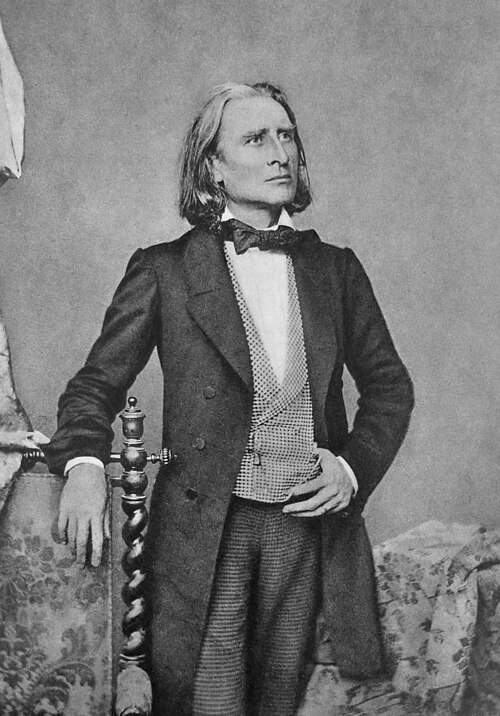
Hungarian Rhapsody No. 6, in D flat major, was published in 1853 and has four very different sections: a solemn march, a presto, a slow recitative in B flat minor with the air of a Gypsy fiddler’s improvisation and a final friska whose difficulty lies in the long, ever faster series of octaves in the right hand.
Like the rest of the series, Liszt built it from melodies he heard from Gypsy bands and took for Hungarian folk music. Martha Argerich recorded it for her first record with Deutsche Grammophon, a few years after winning the Busoni competition in Bolzano and the Geneva competition in 1957.
Recording1962
Martha Argerich
- Duration
- 6 min
- Source
- Deutsche Grammophon
- Archive
- Wikimedia Commons
- Licence
- Public domain (dedication)