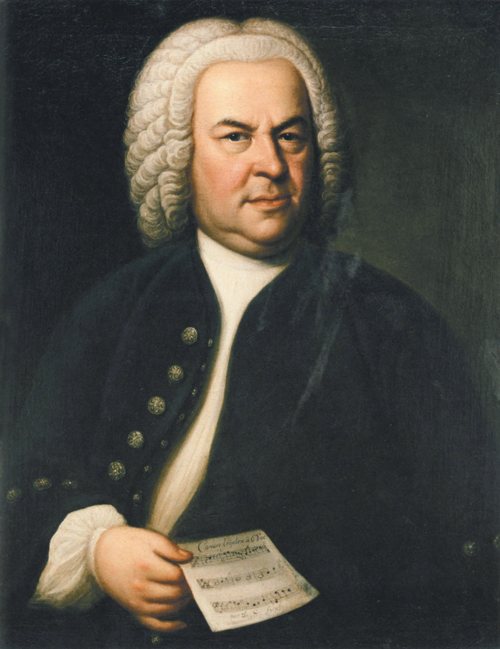
Context
Bach published it in 1735, in the second part of his Clavier-Übung, paired with the French Overture BWV 831. The two works set against each other the great national styles of the age: the Italian concerto and the French orchestral suite, transferred to solo harpsichord. The original title indicates that the concerto is written “in the Italian taste”.
The intended instrument is a two-manual harpsichord. Bach uses the change between a loud manual and a soft one to imitate the alternation between the full orchestra and the soloist, and marks forte and piano in the score. The central Andante is an ornamented aria over a regular accompaniment; the outer movements follow the ritornello form he had learned by transcribing Vivaldi’s concertos. Johann Adolph Scheibe, a critic of Bach in other respects, praised it as a model of the concerto for a single instrument.
Score
- Source
- Mutopia Project
- Licence
- CC BY-SA 3.0
‘Italian Concerto’, edited by Boris Dušek and Jay Anderson for the Mutopia Project (from Leipzig: Breitkopf & Härtel, 1853. Plate B.W. III.), Creative Commons Attribution-ShareAlike 3.0. https://www.mutopiaproject.org/cgibin/piece-info.cgi?id=1826
Wanda Landowska
- Duration
- 13 min
- Source
- Internet Archive (colección Landowska)
- Archive
- Internet Archive
- Licence
- CC0 1.0 · public domain
Fourth batch of the Landowska collection: the 1933 Goldberg Variations, the Italian Concerto, the Toccata BWV 912 and others.