Context
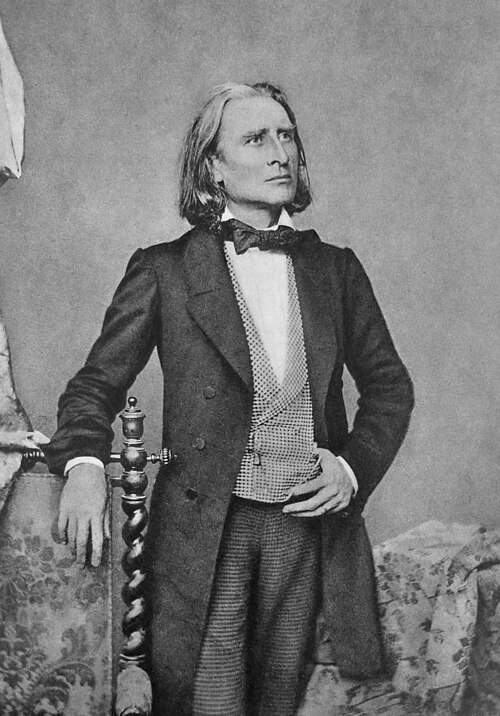
Liszt conceived the Totentanz (“Dance of Death”) around 1838, after seeing in the Camposanto of Pisa the fresco of the Triumph of Death, which was then attributed to Orcagna. He finished it in 1849 and revised it in 1853 and 1859. It is a set of variations for piano and orchestra on the Dies irae, the Gregorian sequence of the Mass for the dead that Berlioz had quoted in the finale of the Symphonie fantastique, whose first performance Liszt attended in 1830.
The piano writing is percussive and harsh for its day, with glissandos, repeated notes and cadenzas that sound like blows, and the variations range from the grotesque to the almost religious. This recording comes from the Al Goldstein collection in the Pandora archive; the soloist is the pianist Neal O’Doan and the source does not identify the orchestra. The Dies irae returns in Saint-Saëns’s Danse macabre.
Score
- Source
- Wikimedia Commons
- Licence
- Public domain
Neal O'Doan
- Duration
- 16 min
- Source
- Pandora Music (ibiblio)
- Archive
- Wikimedia Commons
- Licence
- CC BY-SA 2.0
From the Al Goldstein collection; the source does not name the orchestra.