Context
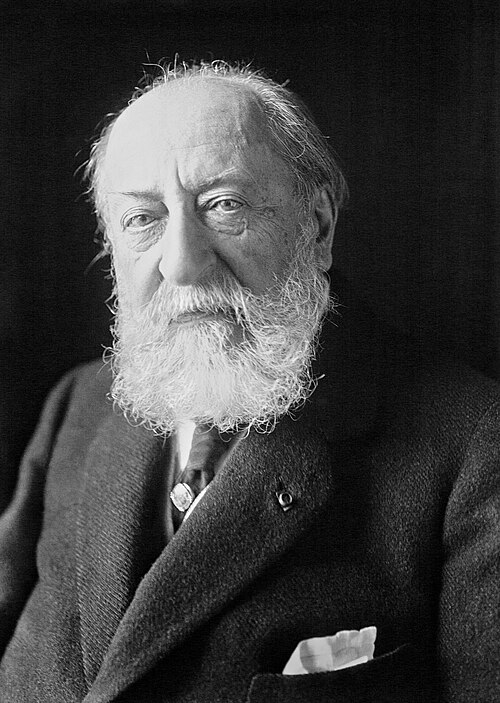
Saint-Saëns started from a song he had written in 1872 to a poem by Henri Cazalis and transformed it into a symphonic poem, first performed in Paris in January 1875. The story is a popular legend: at midnight, Death tunes his fiddle and the skeletons dance on the graves until the cock’s crow sends them back to them.
The work is full of inventions: the solo violin has its E string tuned a semitone lower, so that its two open strings form a tritone, the “devil’s” interval; the xylophone imitates the clatter of bones, and the Gregorian Dies irae appears distorted into waltz rhythm. Liszt transcribed it for piano, and Saint-Saëns himself quoted it in “Fossils”, from The Carnival of the Animals.
Score
- Source
- Wikimedia Commons
- Licence
- Public domain
Philadelphia Orchestra, Leopold Stokowski
- Duration
- 7 min
- Source
- Internet Archive (Victor 6505)
- Archive
- Internet Archive
- Licence
- CC0 1.0 · public domain
Recording of 29 April 1925, one of Victor's first electrical recordings.
Philadelphia Orchestra, Leopold Stokowski (Thaddeus Rich, violín)
- Duration
- 7 min
- Source
- Transfer by Bob Varney
- Archive
- Internet Archive
- Licence
- CC BY 3.0
The first electrical recording of an orchestral work to be released (Victor 6505, 1925).