Context
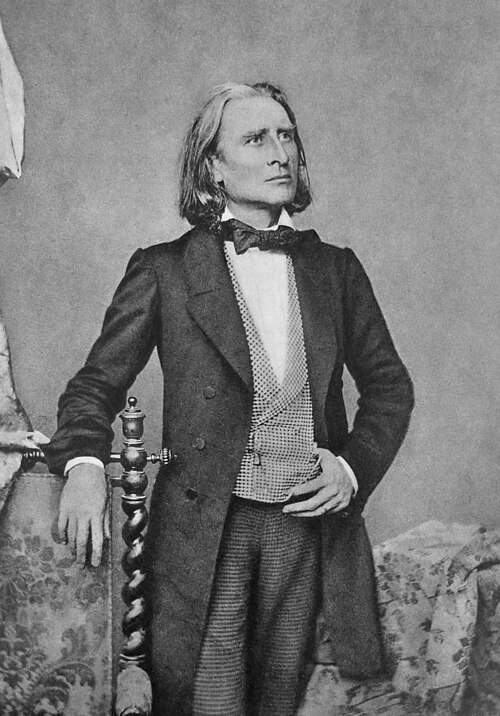
In this poem by Heinrich Heine, Cologne Cathedral is reflected in the waters of the Rhine. Inside there is a painting of the Virgin on gilded leather, and the poet discovers that she has the eyes, the lips and the cheeks of his beloved. Schumann set it in Dichterliebe in 1840, the same year in which Liszt wrote his first version, which he revised in the 1850s.
In Liszt’s song, the piano evokes the current of the river with an accompaniment in continuous motion, over which the voice advances calmly to the image of the beloved. Liszt also made a version for solo piano. Heinrich Schlusnus recorded it in 1932 with orchestral accompaniment, in an arrangement of the period, on the same disc as Es muss ein Wunderbares sein.
Heinrich Schlusnus, Kapelle der Staatsoper Berlin, Alois Melichar
- Duration
- 4 min
- Source
- Onkel Greifenklau
- Archive
- Internet Archive
Grammophon 90199, with orchestral accompaniment.