Context
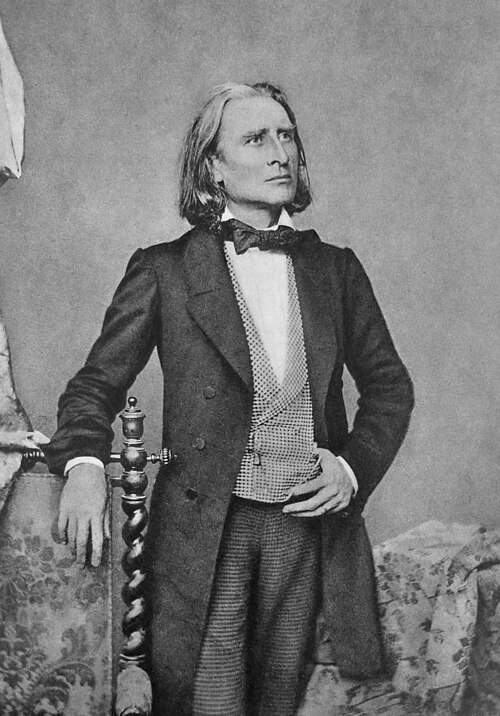
It is one of Liszt’s shortest and best-known songs. He wrote it in 1852 to lines by Oskar von Redwitz, from his poem Amaranth, a publishing success of the time, and published it in 1859. The text says that the love of two souls who hide nothing from each other, share joy and sorrow and, from the first kiss to death, speak only of love, must be something wonderful.
Liszt resolves it in a couple of minutes, with a simple melody over calm piano chords and none of the showiness of his piano music. That simplicity made it popular with concert and operetta singers, and it was often arranged for voice and orchestra. Here there are three interwar versions: that of Richard Tauber (1928) and of Heinrich Schlusnus (1932), with orchestra, and that of the tenor Karl Erb (1937), with piano, as Liszt wrote it.
Score
- Source
- Wikimedia Commons
- Licence
- Public domain
Heinrich Schlusnus, Kapelle der Staatsoper Berlin, Alois Melichar
- Duration
- 2 min
- Source
- Onkel Greifenklau
- Archive
- Internet Archive
Grammophon 90199, with orchestral accompaniment.
Karl Erb, Bruno Seidler-Winkler
- Duration
- 2 min
- Source
- Onkel Greifenklau
- Archive
- Internet Archive
Electrola DA 4425, reissued on the Preiser CD 89208.
Richard Tauber, Orchester des Großen Schauspielhauses Berlin, Ernst Hauke
- Duration
- 2 min
- Source
- Onkel Greifenklau
- Archive
- Internet Archive
Recorded on 26 January 1928 (Parlophone RO 20302), with orchestral accompaniment.