Context
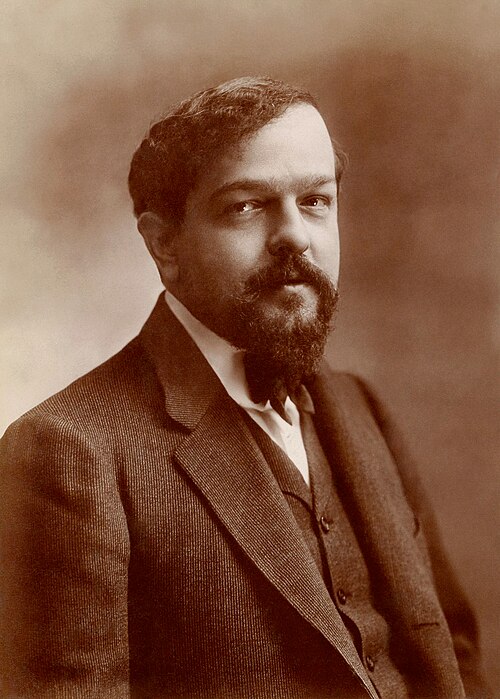
Debussy composed the twelve Études between 5 August and 29 September 1915 at Pourville, on the Normandy coast, ill and in the midst of war. That year he was preparing an edition of Chopin for Durand, and he dedicated the collection to his memory, after hesitating between him and Couperin. Published in two books in 1916, it was premiered piecemeal by George Copeland in New York, Walter Rummel in Paris and Marguerite Long.
Each étude tackles a technical problem: the first book, intervals (thirds, fourths, sixths, octaves) and finger mechanics; the second, the search for sonorities: ornaments, repeated notes, arpeggios, chords. Debussy wrote that they concealed a rigorous technique beneath harmonic flowers. The first, “Pour les cinq doigts”, mocks Czerny with the humour of Doctor Gradus ad Parnassum. They are the pianistic face of the late Debussy and continue the line of Chopin’s Études.
Walter Gieseking recorded them in 1954 at Abbey Road as part of his complete Debussy for EMI.
Walter Gieseking
- Duration
- 40 min
- Archive
- Wikimedia Commons
- Licence
- Public domain (dedication)
Grabada en 1954 en el estudio 3 de Abbey Road (Londres) para Columbia/EMI, dentro de la integral de Debussy de Gieseking; transfer de la Médiathèque musicale Mahler publicado en Wikimedia Commons como dominio público.