Context
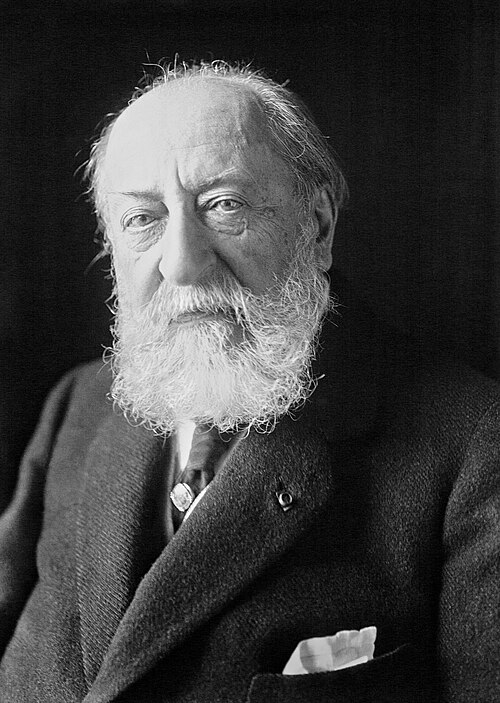
Saint-Saëns wrote this concerto in about three weeks for a concert in Paris in May 1868 conducted by Anton Rubinstein, with himself at the piano. The haste shows in some passages, but the work soon established itself and is today the most played of his five concertos.
Its form is unusual: it does not begin with an allegro, but with a solo cadenza of Bachian, improvisatory character, followed by a slow, grave movement. The second movement is a light scherzo, almost operetta-like, and the finale a dizzying tarantella. This passage from solemnity to lightness prompted the remark, attributed to the pianist Zygmunt Stojowski, that the concerto “begins with Bach and ends with Offenbach”. It owes much to the piano writing of Liszt, whom Saint-Saëns admired and who defended his music.
Arthur De Greef, Royal Albert Hall Orchestra, Landon Ronald
- Duration
- 15 min
- Source
- Animating Apothecary Archives
- Archive
- Internet Archive
The first recording of the concerto, acoustic (Victor 55161), on four sides joined.