Context
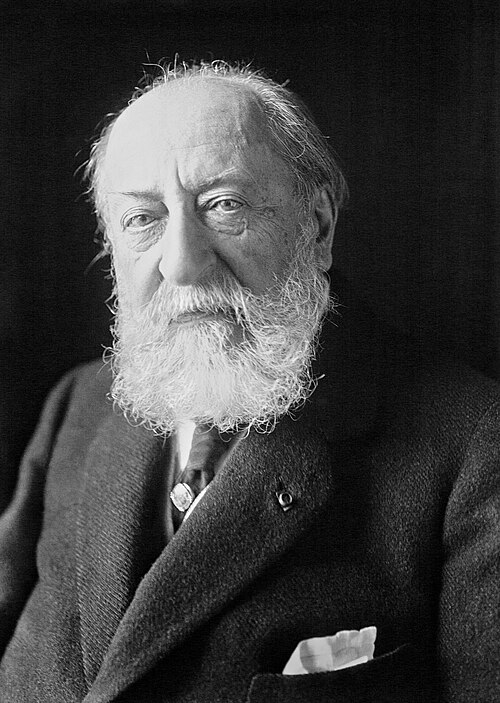
Saint-Saëns finished the score on 12 March 1873 and dedicated it to his pupil Berthe Pochet. It was the second of his four symphonic poems, after Le Rouet d’Omphale, and it too started from an ancient myth: Phaethon, son of the Sun, manages to drive his father’s chariot, loses control of the horses and Jupiter strikes him down with a thunderbolt. The premiere, on 7 December 1873 at the Châtelet with Édouard Colonne, was cool; one critic said he had heard the rattle of a hired cab coming down from Montmartre rather than the fiery steeds.
An ostinato in the strings and harp imitates the gallop and sustains almost the whole work. A solemn theme in the trumpets and trombones seems to portray the hero, an outburst from the full orchestra marks the thunderbolt and the music dies away in a funereal tone. The Danse macabre, of the following year, ended up eclipsing it.
Louis Fourestier, winner of the Prix de Rome in 1925, recorded it in February 1953 at the Théâtre des Champs-Élysées.
Orchestre national de la Radiodiffusion française, Louis Fourestier
- Duration
- 10 min
- Archive
- Wikimedia Commons
- Licence
- Public domain (dedication)
Grabado el 17-18 de febrero de 1953 en el Théâtre des Champs-Élysées con los otros poemas sinfónicos, publicados en LP por Pathé (Angel 35058 en EE. UU., 1954); transfer de la BnF en Wikimedia Commons, dominio público.