Context
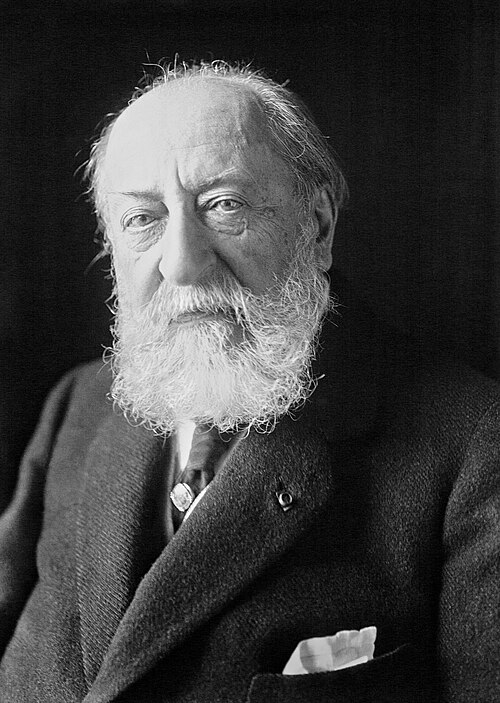
Saint-Saëns finished the last of his four symphonic poems on 6 January 1877, dedicated it to Henri Duparc, and Édouard Colonne premiered it at the Théâtre du Châtelet on 28 January. It returns to Hercules, who had already been the protagonist of Le rouet d’Omphale, now as a young man. The score carries the programme at its head: at the outset of life, the hero sees two paths open before him, that of pleasure and that of virtue; he ignores nymphs and bacchantes, chooses struggle and glimpses, amid the flames of the pyre, the reward of immortality.
The music sets two themes against each other, that of virtue, entrusted mainly to the strings, and that of pleasure, to the winds, with a central episode of oriental colour and an ample coda. It is the longest of the series, although it never enjoyed the popularity of the Danse macabre. Louis Fourestier, principal conductor of the Paris Opéra between 1938 and 1965, recorded it in 1953 with the Orchestre National de la Radiodiffusion Française, together with the other three poems.
Orchestre national de la Radiodiffusion française, Louis Fourestier
- Duration
- 15 min
- Archive
- Wikimedia Commons
- Licence
- Public domain (dedication)
Grabado el 17-18 de febrero de 1953 en el Théâtre des Champs-Élysées con los otros poemas sinfónicos, publicados en LP por Pathé (Angel 35058 en EE. UU., 1954); transfer de la BnF en Wikimedia Commons, dominio público.