Context
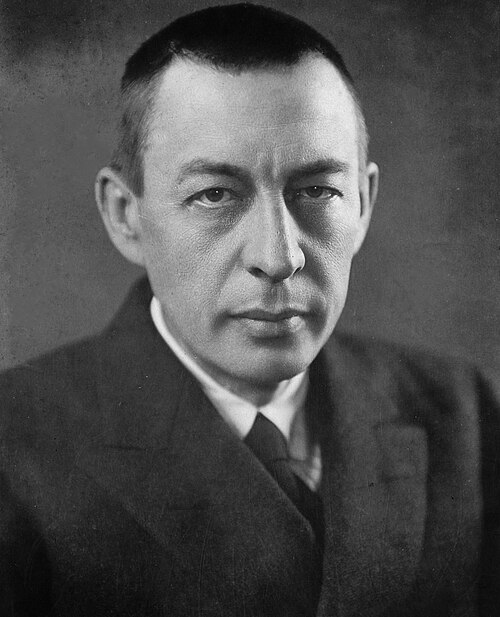
Almost thirty years after the Second Symphony, Rachmaninoff returned to the genre in 1935 and 1936, at Villa Senar, his house beside Lake Lucerne, in the summers left free by his concert career. The Philadelphia Orchestra and Leopold Stokowski gave the first performance in November 1936. Public and critics received it coolly; the composer revised it in 1938 and defended it as one of his best works.
It has only three movements: the central one combines the slow movement and the scherzo. A brief opening phrase of liturgical character returns throughout the symphony, and the Dies irae, present in almost all his music, appears once more. The orchestration is more transparent and varied than in his earlier works, with instrumental solos and quick changes of colour. Together with the Symphonic Dances of 1940, it is his last great orchestral work.
Philadelphia Orchestra, Sergei Rachmaninoff (director)
- Duration
- 37 min
- Source
- Onkel Greifenklau
- Archive
- Internet Archive
CD 3 of the complete Rachmaninoff recordings (RCA), transferred from the original 78s and LPs. Rachmaninoff conducts the Philadelphia Orchestra: The Isle of the Dead and Vocalise (1929) and his Third Symphony (1939).