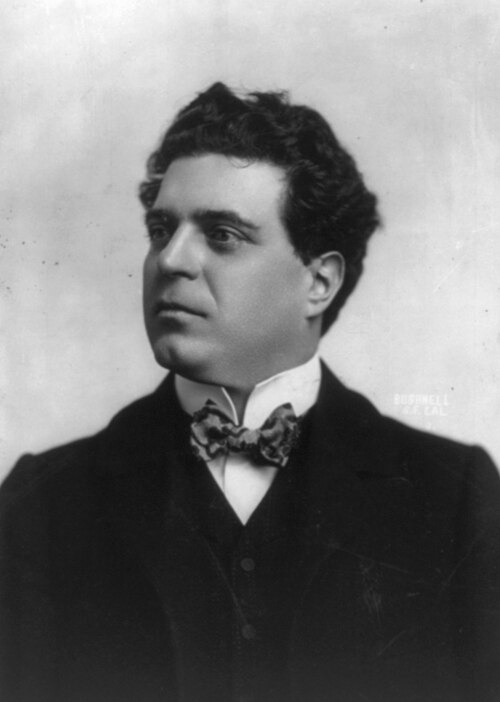
Context
Mascagni wrote Cavalleria rusticana for the competition for one-act operas announced by the Milanese publisher Edoardo Sonzogno in 1888, with a libretto by Giovanni Targioni-Tozzetti and Guido Menasci after the story by Giovanni Verga. It was first performed at the Teatro Costanzi in Rome on 17 May 1890 with immediate success and became the model of verismo.
The Intermezzo is heard over the empty square on Easter morning, just after Santuzza has revealed to Alfio his wife's betrayal with Turiddu and before the toast and the challenge that end in death. Its melody for strings became so popular that it was soon turned into an Ave Maria and passed into film, from Raging Bull to The Godfather Part III. It is conducted by Walter Lutze, conductor at the Deutsches Opernhaus in Berlin between 1935 and 1944 and prolific on Telefunken records. Mascagni himself conducted excerpts from the opera in some 1940 recordings.
Orchester des Deutschen Opernhauses Berlin, Walter Lutze
- Duration
- 3 min
- Source
- Public Domain Project
- Archive
- Wikimedia Commons
- Licence
- Public domain (dedication)
Grabado en Berlín el 26 de marzo de 1940 y publicado en 1941 (Telefunken E 3073).