Context
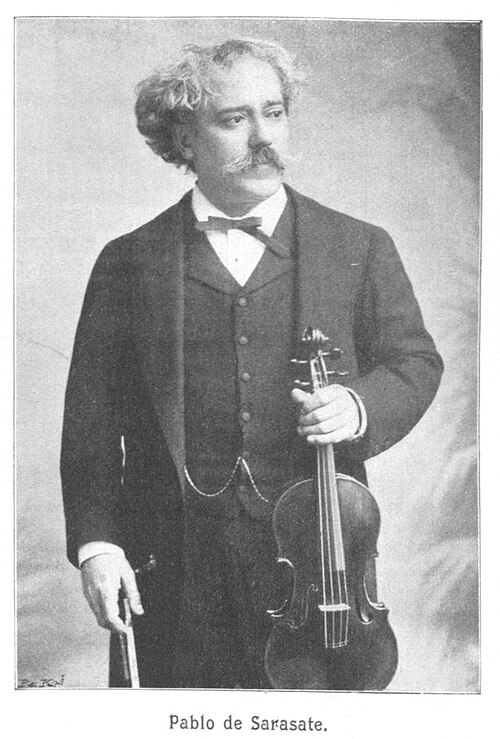
Leipzig hosted the premiere in 1878 of the Zigeunerweisen (Gypsy Airs), for violin and orchestra, which would become Sarasate's most famous work. Like many of his contemporaries, the violinist confused Hungarian folk music with that of the Roma: his themes come from Hungarian pieces, among them a song by Elemér Szentirmay that he uses in the muted section, and the finale takes a theme from Liszt's Hungarian Rhapsody No. 13 in csárdás rhythm.
It follows the model of the csárdás in four sections: a rhapsodic introduction, a slow section with an improvisatory air, the muted lament and an Allegro molto vivace full of double stops, harmonics and left-hand pizzicatos. Sarasate himself recorded it in 1904, without the third section for lack of space. Here it is played by Jascha Heifetz with Samuel Chotzinoff at the piano, in sessions on 13 and 14 October 1919 for Victor.
Jascha Heifetz, Samuel Chotzinoff
- Duration
- 8 min
- Archive
- Internet Archive
Grabada en Camden el 13 y 14 de octubre de 1919 (matrices C-23407 y C-23410, Victor 74694 y 74689); transferida de la reedición en un disco de dos caras, Victor 6153 (1923).