Context
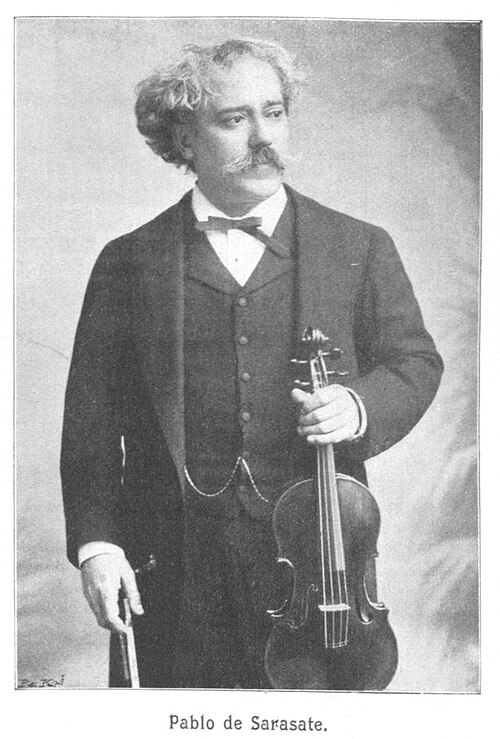
In 1877 the German publisher Fritz Simrock commissioned Sarasate to write some Spanish dances for violin and piano, with the idea of repeating the success of Brahms's Hungarian Dances. Eight resulted, in four books of two contrasting pieces. The second, Op. 22, was written during the violinist's first tour of Scandinavia and is dedicated to the Moravian violinist Wilma Neruda; it pairs the Romanza andaluza with this Jota navarra.
The jota, in A major and in triple time, is the Pamplona-born composer's tribute to his homeland: a lively, brilliant dance with abundant double stops. Sarasate often played the dances as encores, and their commercial success multiplied editions and arrangements. The series continues with the Playera of the third book. It was recorded in 1929 by the Czech Váša Příhoda, a Paganini specialist, with Charles Cerne at the piano.