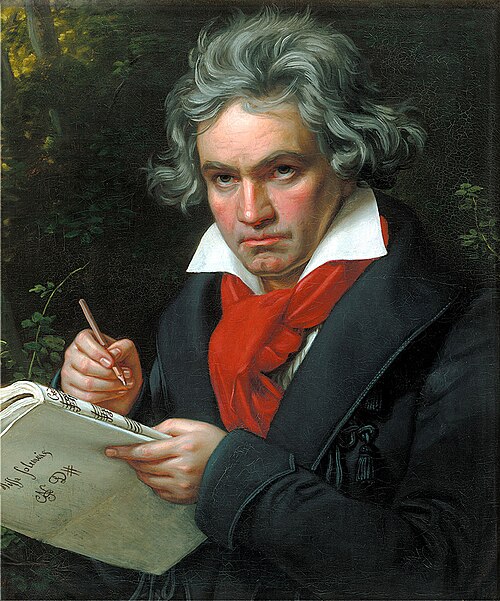
Context
The second of the three sonatas of Op. 2, dedicated to Haydn, is the brightest and the one that demands the most pianistic ingenuity. The first movement opens with a motif that leaps between registers and develops passages of considerable difficulty for the time, written by a young pianist who wanted to shine before the Viennese public.
The largo appassionato, in D major, is the most original part of the work: a chorale-like melody over a staccato bass that imitates the pizzicato of the double basses, an almost orchestral effect on the keyboard. In place of the minuet, Beethoven writes a scherzo, a term that appears here for the first time in his sonatas, and the final rondo, carefully graceful, occupies the place that in Mozart would be held by a brilliant finale. No. 1 and No. 3 complete a triptych in which each sonata explores a different character.
Score
- Source
- Wikimedia Commons
- Licence
- Public domain
Artur Schnabel
- Duration
- 23 min
- Source
- Onkel Greifenklau
- Archive
- Internet Archive
Volume 1 of the first complete cycle of the sonatas ever recorded (HMV / Beethoven Sonata Society, 1932-35). Sonatas 1, 2, 3, 4.