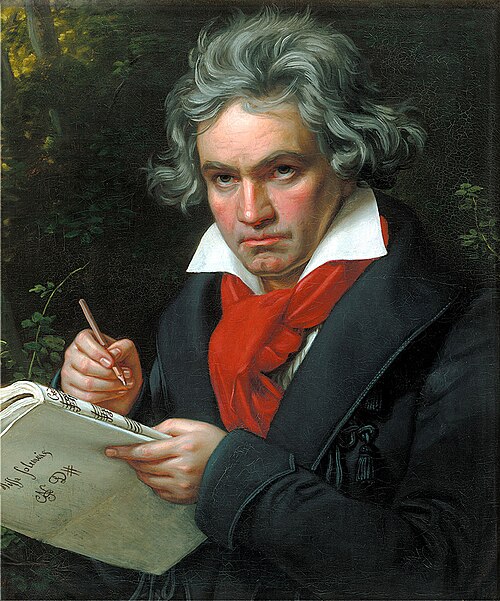
Context
The nickname “The Tempest” comes from Anton Schindler, Beethoven’s secretary, who claimed that the composer had recommended him to read Shakespeare’s The Tempest in order to understand the sonata. Schindler is an unreliable source and most scholars give the anecdote no credit, but the name stuck. It belongs to the group of Op. 31, written in 1802 and published in Zurich in 1803.
Its first movement alternates slow arpeggios, in largo, with an agitated allegro, as if the music were hesitating over whether to begin. In the recapitulation, the arpeggios give way to two unaccompanied recitatives, wrapped in pedal, that sound like a human voice speaking alone; it is one of the boldest moments of the early sonatas. The adagio, in B flat, is noble and restrained, and the final allegretto, a perpetual motion in semiquavers, keeps the tension at a low murmur until the last chord. Together with the Pathétique and the Appassionata it forms the trio of dramatic sonatas most played in his catalogue.
Score
- Source
- Wikimedia Commons
- Licence
- Public domain
Artur Schnabel
- Duration
- 23 min
- Source
- Onkel Greifenklau
- Archive
- Internet Archive
Volume 5 of the first complete cycle of the sonatas ever recorded (HMV / Beethoven Sonata Society, 1932-35). Sonatas 16, 17, 18, 19, 20.