Context
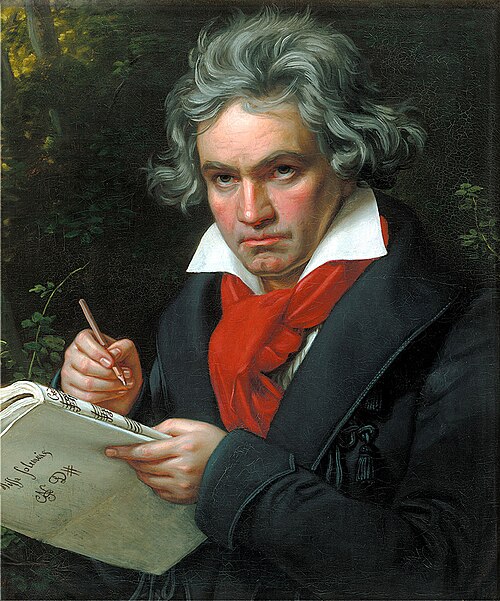
Beethoven wrote the Octet in Bonn, around 1792, before settling in Vienna, for the court wind band of the Elector Maximilian Franz: two oboes, two clarinets, two horns and two bassoons. In the manuscript it appears as Parthia. In 1795 he reworked and expanded it as his first String Quintet, Op. 4. It was not published until after his death, hence the opus number, which has nothing to do with its date.
It has four movements: allegro, andante, minuet and presto. The Rondino WoO 25, for the same scoring, is thought to be its original, discarded finale. A note in the autograph indicates that Beethoven intended it, at least at some point, for concert performance.
The recording comes from a concert on 30 May 1981 at the Meany Theater in Seattle, with members of the Soni Ventorum Wind Quintet and other musicians, among them the oboist Laila Storch.
Soni Ventorum Wind Quintet y otros
- Duration
- 23 min
- Source
- Pandora Music (ibiblio)
- Archive
- Wikimedia Commons
- Licence
- CC BY-SA 2.0
Concierto del 30 de mayo de 1981 en el Meany Theater de Seattle, con miembros del Soni Ventorum Wind Quintet (Laila Storch y Paul Margelli, oboes; William McColl y Mark Wardlaw, clarinetes; David Kappy y Rodger Burnet, trompas; Arthur Grossman y Francine Floyd, fagotes); colección Al Goldstein, Open Audio License de la EFF.