Context
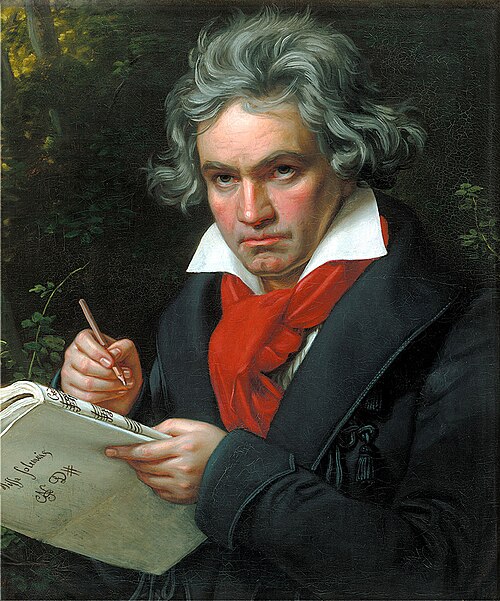
Beethoven wrote the Große Fuge at the end of 1825 as the finale of the Quartet Op. 130, commissioned by Prince Nikolai Galitzin. At the premiere, by the Schuppanzigh Quartet on 21 March 1826, the audience called for two movements to be repeated, but not the fugue, which one critic found “incomprehensible, like Chinese”. The publisher Artaria persuaded Beethoven to write another finale and published the fugue separately in May 1827, after the composer's death, as Op. 133, dedicated to Archduke Rudolph.
It is an immense double fugue, 741 bars long, which Beethoven subtitled “tantôt libre, tantôt recherchée” (at times free, at times studied). Neglected for much of the 19th century, in the 20th it came to be counted among his most admired works: Stravinsky called it music that would be “contemporary forever”.
The Léner Quartet, founded in Budapest in 1918 and responsible for the first complete recorded cycle of Beethoven's quartets, gives here the first published recording of the work, made in London in 1930.
Léner Quartet
- Duration
- 16 min
- Source
- Wikimedia Commons
- Archive
- Wikimedia Commons
- Licence
- Public domain (dedication)
Grabada el 19 de febrero de 1930 en los estudios de Columbia en Londres (Columbia LX 103-104), primera grabación publicada de la obra.