Context
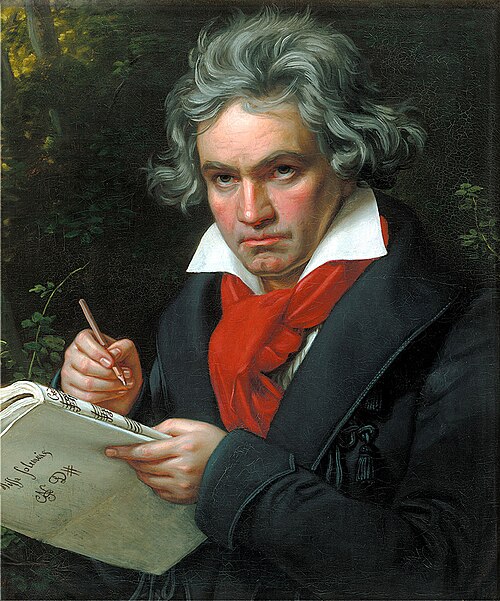
Beethoven worked on Adelaide for an unusually long time, between 1794 and 1795, perhaps until 1796, just after finishing his lessons with Haydn in Vienna. Artaria published it around 1797 with a dedication to the author of the poem, Friedrich von Matthisson, to whom Beethoven did not send a copy until 1800, with a letter apologising for the delay.
The stanzas of the poem always end with the beloved's name. The song is in two parts: a larghetto with a triplet accompaniment that passes through many keys, like the lover who sees her wherever he goes, and an exalted allegro molto on the last stanza, in which flowers spring from his grave. It was very popular in Beethoven's lifetime, and Liszt transcribed it for piano.
It is sung by the baritone Heinrich Schlusnus, a great German Lieder singer of the interwar years, with Franz Rupp at the piano, in 1938.
Heinrich Schlusnus, Franz Rupp
- Duration
- 6 min
- Source
- Emilio's 78 heritage
- Archive
- Internet Archive
Grabada en 1938 en las dos caras de un disco de 30 cm (Grammophon 95391).