Context
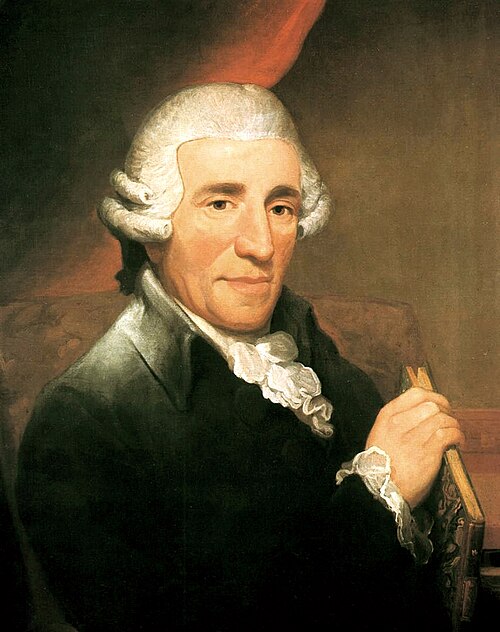
Haydn completed it in 1789 as the last of the three symphonies commissioned from him by the Comte d'Ogny for his concerts in Paris. The nickname came later: in July 1791, during his first stay in England, the University of Oxford made him a Doctor of Music, and as he had not yet finished any of his London symphonies, he conducted this one. The examination piece he submitted was in fact a palindromic minuet.
Three soft G major chords open the slow introduction and three emphatic chords close the work. The Allegro spiritoso derives almost everything from its first theme; the Adagio cantabile conceals an intense central section in the minor, and the minuet plays with six-bar phrases and unexpected pauses. The closing Presto, with its opera buffa turns, looks ahead to Rossini. The London symphonies would soon follow, up to No. 104. Walther Gmeindl, a professor at the Berlin Hochschule für Musik, where his pupils included Celibidache, recorded it in 1940 with the Berlin Philharmonic.
Berliner Philharmoniker, Walther Gmeindl
- Duration
- 28 min
- Source
- Emilio's 78 heritage
- Archive
- Internet Archive
Grammophon 67562-67565 (matrices 1454-1461 GS 9), ocho caras de 78 rpm de 1940.