Context
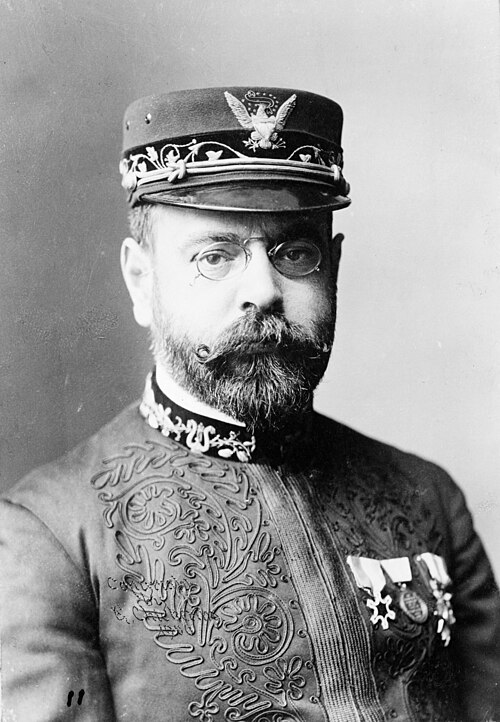
Sousa wrote it in 1901 for his band's performances at the Pan-American Exposition in Buffalo, to which he dedicated it, and he even considered calling it “Spirit of Niagara”. According to his band's soprano, Blanche Duffield, he began sketching it in a pocket notebook on an overnight train journey between Buffalo and New York. Sousa believed it would surpass The Stars and Stripes Forever as a patriotic march.
It did not, but it outlasted The Electric Century, the piece that Francesco Fanciulli, his successor at the head of the Marine Band, played with his band at the same exposition. Sousa called it one of his “sunny marches”: unlike those that evoke the din of war, this one shows the military spirit at its lightest, that of the parade, with uniforms and burnished steel. It is recorded by “The President's Own”, the United States Marine Band, in its complete set of Sousa's marches.
"The President's Own" United States Marine Band
- Duration
- 4 min
- Archive
- Internet Archive
From “The Complete Marches of John Philip Sousa”, vol. 4, by the Marine Band (a work of the US Government, not in copyright).