Context
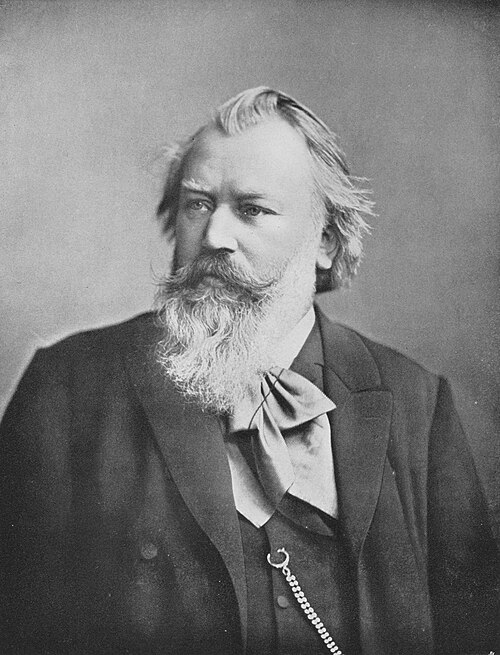
Brahms wrote it in Pörtschach during the summers of 1878 and 1879, and it was premiered in Bonn on 8 November 1879 by Robert Heckmann and his wife, the pianist Marie Heckmann-Hertig. It is the first of his three published violin sonatas. The nickname Regensonate (Rain Sonata) comes from the songs “Regenlied” and “Nachklang” of Op. 59: the dotted rhythm of their motif, like raindrops, appears in fragments in all three movements and is quoted openly as the theme of the finale.
The Adagio, in E flat major, turns that rhythm into a funeral march in its central section, and its theme bursts in twice in the closing rondo, in G minor, before the coda in the major. Brahms finished it while his godson Felix Schumann was mortally ill, and he sent Clara the theme of the adagio. Adolf Busch and Rudolf Serkin, a regular duo from the time the pianist was eighteen and later father-in-law and son-in-law, recorded it on 4 May 1931.
Adolf Busch, Rudolf Serkin
- Duration
- 28 min
- Source
- Emilio's 78 heritage
- Archive
- Internet Archive
Grabada el 4 de mayo de 1931 (HMV DB 1527-1529).