Context
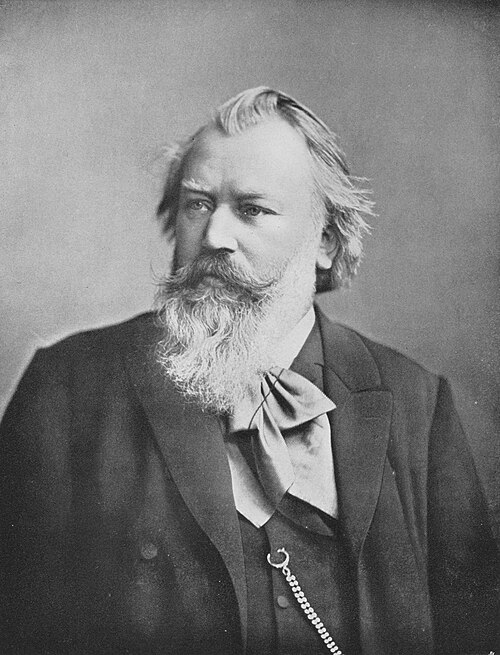
Brahms wrote it in the summer of 1886, which he spent in Hofstetten, by Lake Thun in Switzerland; those weeks also produced the Cello Sonata No. 2 and the Violin Sonata No. 2. He premiered it on 20 December that year with the violinist Jenő Hubay and the cellist David Popper. Clara Schumann wrote in her diary that no earlier work of Brahms had thrilled her so much.
It is the most concentrated of his trios. The first movement starts with an almost Beethovenian outburst and proceeds with such economy that Heinrich von Herzogenberg remarked that lesser composers would hardly dare to be so laconic without leaving something unsaid. It is followed by a fleeting Presto non assai and an Andante grazioso that alternates bars of three and two beats; the finale dwells on hemiolas and displaced accents. It is recorded by the Budapest Trio (Nicholas Roth, Carl van Boomkamp and Peter Stadler) for Decca in London, between December 1935 and April 1936.
Budapester Trio
- Duration
- 19 min
- Source
- Emilio's 78 heritage
- Archive
- Internet Archive
Nicholas Roth, Carl van Boomkamp y Peter Stadler, grabados por Decca en Londres el 19 de diciembre de 1935 y el 30 de abril de 1936 (Grammophon 57064-57066).