Context
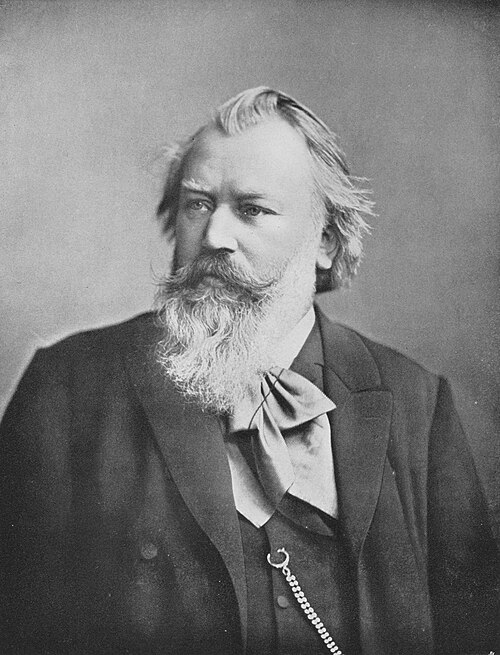
Brahms discovered music in the gypsy style around 1850, when he began accompanying the Hungarian violinist Ede Reményi, and from it came his Hungarian Dances for piano duet, published in two books in 1869 and two more in 1880. They were his most profitable works. Almost all of them rework melodies that circulated as folk tunes; only three are entirely original. No. 2, in D minor, alternates a strongly rhythmic Allegro non assai with a lighter Vivace.
Joseph Joachim, Hungarian by birth and a close friend of Brahms, arranged all the dances for violin and piano in highly virtuosic versions. Here he plays it himself: on 17 August 1903, in Berlin, he recorded five sides for the Gramophone & Typewriter company, with a pianist whose name is not recorded. He was 72 and the first great violinist to leave recordings, a year before Sarasate; those discs are an invaluable document of how the violin was played in the 19th century.
Joseph Joachim
- Duration
- 3 min
- Source
- Onkel Greifenklau
- Archive
- Internet Archive
Del CD 1 de la EMI Centenary Edition (1997), con discos de Gramophone & Typewriter, Fonotipia y Odeon de 1901 a 1906; la fecha y el número de cada uno van en el nombre del archivo. Entre ellos, Grieg tocando su «Til våren» (París, 1903), Sarasate su Caprice basque (1904, recortado para caber en una cara), Mary Garden con Debussy al piano (1904), Joachim (1903) y los creadores de Otello y Yago, Francesco Tamagno (1903) y Victor Maurel (1904).