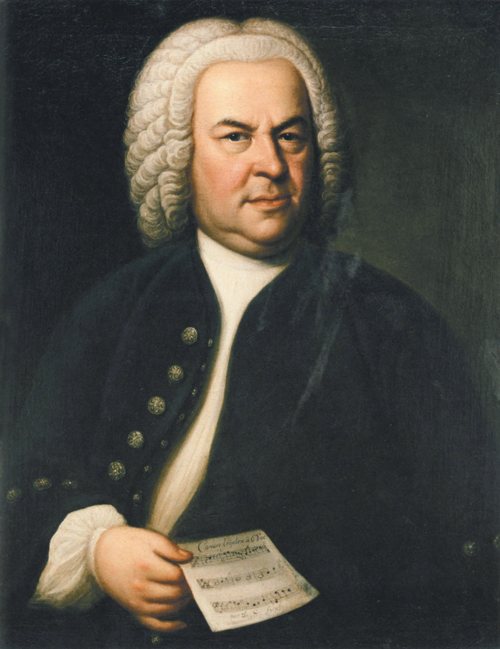
Context
The six sonatas for violin and harpsichord BWV 1014–1019 probably date from the years in Köthen and early Leipzig. Their novelty lies in the role of the harpsichord: instead of limiting himself to realising a basso continuo, the keyboard player has the right hand written out in full, as a second melodic voice that converses with the violin. The result is a trio sonata for two instruments.
The third, in E major, follows the order of the sonata da chiesa, with four movements slow–fast–slow–fast. The opening Adagio sets an ornamented violin melody over broad chords in the harpsichord; the second is an allegro of imitative writing; the third, in C sharp minor, is built over an ostinato bass, and the finale is another contrapuntal allegro. These sonatas were a model for the sonata with obbligato keyboard of the next generation.
Wanda Landowska, Yehudi Menuhin
- Duration
- 6 min
- Source
- Internet Archive (colección Landowska)
- Archive
- Internet Archive
- Licence
- CC0 1.0 · public domain
Fourth batch of the Landowska collection: the 1933 Goldberg Variations, the Italian Concerto, the Toccata BWV 912 and others.