Context
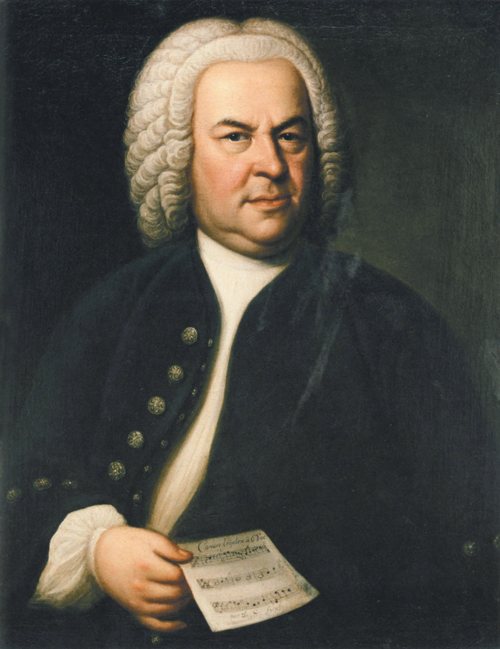
The first five French Suites already appear in the music notebook that Bach prepared in 1722 for his second wife, Anna Magdalena, and the set was later copied by his pupils with numerous variants. The name is not Bach’s. Compared with the English Suites, they are shorter works without a prelude, of lighter writing, suited to teaching and domestic music-making.
The sixth, in E major, is the most luminous and the one with the most dances: besides the allemande, courante, sarabande and gigue, it includes a gavotte, a polonaise, a bourrée and a minuet. The polonaise was then a fashionable dance in Saxony, whose elector was also King of Poland. The final gigue, in fugal writing, closes the suite with energy.
Score
- Source
- Mutopia Project
- Licence
- CC BY-SA 4.0
‘French Suite no. 6 in E major’, edited by Knute Snortum for the Mutopia Project (from Bach-Gesellschaft, 1863), Creative Commons Attribution-ShareAlike 4.0. https://www.mutopiaproject.org/cgibin/piece-info.cgi?id=1935
Wanda Landowska
- Duration
- 9 min
- Source
- Internet Archive (colección Landowska)
- Archive
- Internet Archive
- Licence
- CC0 1.0 · public domain
First batch of the Landowska collection.