Context
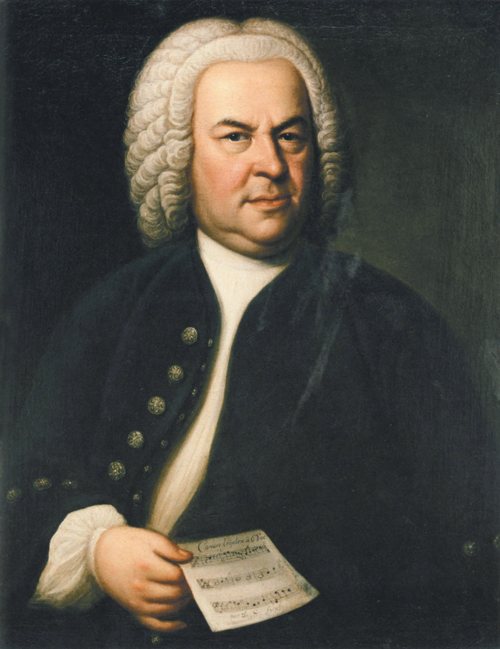
Bach probably wrote it in Köthen around 1720 and revised it in Leipzig. The autograph does not survive, but many copies do, a sign that it circulated widely in the composer’s lifetime and afterwards. At the beginning of the nineteenth century his first biographer, Johann Nikolaus Forkel, wrote that he knew of no other work like it, and it was one of the pieces of Bach most played by Romantic pianists.
The fantasia alternates quick passages that range over the keyboard, arpeggiated chords and sections marked as recitative, in which the harpsichord imitates the declamation of an opera singer. The harmony passes from one distant key to another by means of the chromaticism that gives the work its title. The fugue that follows takes a subject that is also chromatic and ends in increasingly free and virtuoso writing, with a conclusion in octaves.
Score
- Chromatic Fantasy and Fugue, BWV 903 (Fantasy)7 pp.
- Chromatic Fantasy and Fugue, BWV 903 (Fugue)8 pp.
- Source
- Mutopia Project
- Licence
- Public domain
Wanda Landowska
- Duration
- 13 min
- Source
- Internet Archive (colección Landowska)
- Archive
- Internet Archive
- Licence
- CC0 1.0 · public domain
Fourth batch of the Landowska collection: the 1933 Goldberg Variations, the Italian Concerto, the Toccata BWV 912 and others.