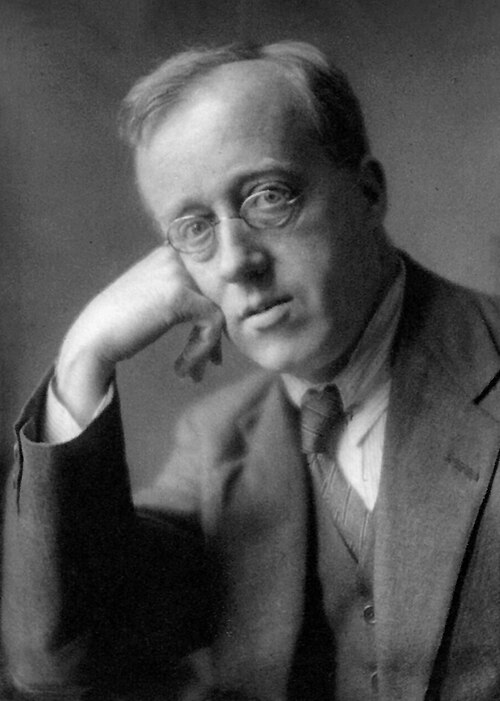
The Planets, Op. 32 (first recording, Holst conducting)
1914–16
Context
Holst wrote the suite between 1914 and 1916, when an interest in astrology led him to imagine the character of each planet: Mars, the bringer of war; Venus, of peace; Mercury, the winged messenger; Jupiter, of jollity; Saturn, of old age; Uranus, the magician; and Neptune, the mystic, which fades away with a wordless women’s chorus. The Earth does not appear, and Pluto had not yet been discovered.
Adrian Boult conducted it at a private first performance in 1918 and its success was immediate. This is the first recording of the work, acoustic, with Holst himself at the head of the London Symphony Orchestra in the early 1920s; a document of the tempos the composer wanted, notably fast in “Mars”. At the end the Marching Song is added, a short orchestral piece by Holst published on the same disc.
London Symphony Orchestra, Gustav Holst
- Duration
- 48 min
- Archive
- Internet Archive
The first recording of The Planets, acoustic, conducted by Holst himself (Columbia L 1543, fourteen sides joined); it ends with the Marching Song.