Context
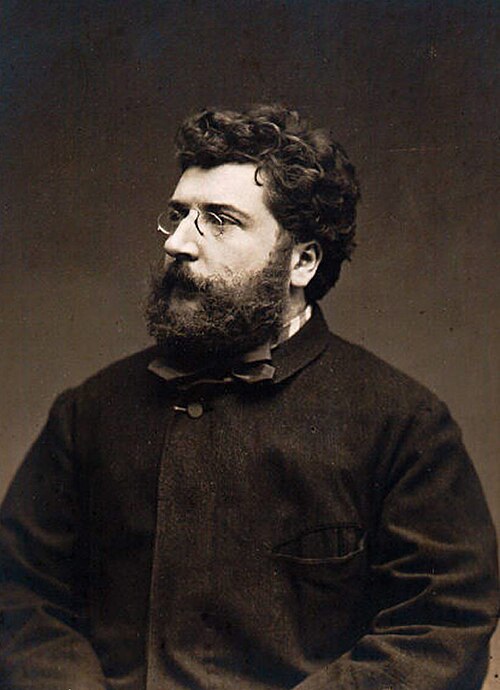
With this habanera Carmen makes her entrance in the first act. Bizet took the melody from “El arreglito”, a song by the Spaniard Sebastián Iradier published in 1863, believing it to be a folk tune; when he learnt that it had a composer, he acknowledged it in the first edition of the vocal score. The text is by Bizet himself, who reworked the number several times during rehearsals until he satisfied Célestine Galli-Marié, who premiered it at the Opéra-Comique on 3 March 1875.
Over an unmoving D pedal, the voice descends with insinuating chromaticism, and each verse in D minor leads into a refrain in the major; at the end Carmen throws a flower to Don José, the only one who has paid her no attention. There are two recordings: that of Emma Calvé, from 1902, acclaimed in her day as the ideal Carmen, and that of the contralto Alice Raveau, from 1928, also remembered for her Orfeo in Gluck.
Alice Raveau
- Duration
- 3 min
- Archive
- Internet Archive
Pathé X 0674, grabado en 1928.
Emma Calvé
- Duration
- 3 min
- Source
- Onkel Greifenklau
- Archive
- Internet Archive
Del CD 1 de la EMI Centenary Edition (1997), con discos de Gramophone & Typewriter, Fonotipia y Odeon de 1901 a 1906; la fecha y el número de cada uno van en el nombre del archivo. Entre ellos, Grieg tocando su «Til våren» (París, 1903), Sarasate su Caprice basque (1904, recortado para caber en una cara), Mary Garden con Debussy al piano (1904), Joachim (1903) y los creadores de Otello y Yago, Francesco Tamagno (1903) y Victor Maurel (1904).