Context
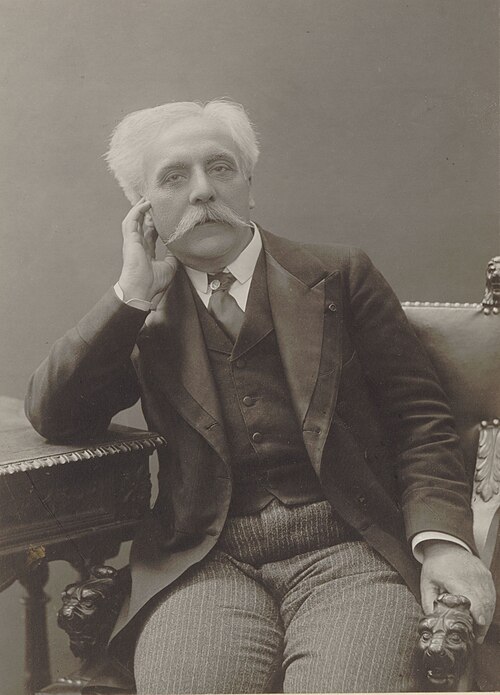
It is the most famous of Fauré’s early songs, written in the 1870s. The text is an anonymous Italian poem freely adapted into French by Romain Bussine: someone waking from a dream in which they were fleeing with their beloved towards the light begs the night to give back that illusion. It was gathered with “Hymne” and “Barcarolle” in the composer’s first collection of songs, of 1878; the opus number was assigned almost twenty years later.
The voice unfolds a long, suspended melody over the piano’s repeated chords, which lends itself so readily to transcription that the arrangements, above all for cello, are almost as well known as the original. It is sung by the mezzo-soprano Claire Croiza, a great interpreter of French mélodie, with Georges Reeves at the piano, on a Columbia disc from around 1930.
Claire Croiza, Georges Reeves
- Duration
- 2 min
- Source
- Onkel Greifenklau
- Archive
- Internet Archive
Grabación de Columbia de hacia 1927-1932 (sin fecha exacta en el ítem), aquí desde la reedición en LP de EMI (ALP 2115, hacia 1970); Georges Reeves al piano.