Context
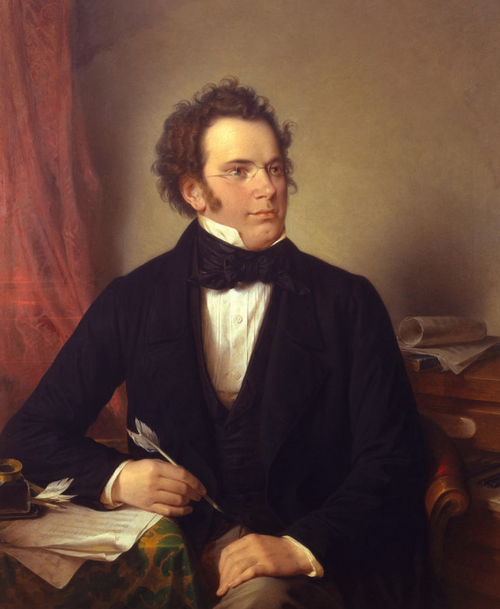
Schubert was eighteen when he set Goethe’s ballad to music in 1815; according to Joseph von Spaun, he wrote it in a few hours, one afternoon. He revised it three times and published the fourth version in 1821 as his Op. 1, shortly after the public premiere on 7 March at the Kärntnertortheater, where it was sung by the baritone Johann Michael Vogl with Anselm Hüttenbrenner at the piano. Its success made the young composer known in Vienna.
A single singer embodies four characters, each in his own register: the narrator, the father, the terrified child and the Erl-King, who tries to seduce him with gentle melodies. The piano gives no respite, with repeated octaves in triplets that evoke the gallop, until it falls silent before the final phrase. Liszt transcribed it for piano and Berlioz orchestrated it. It is recorded in 1933 by the baritone Heinrich Schlusnus and the pianist Franz Rupp.
Heinrich Schlusnus, Franz Rupp
- Duration
- 4 min
- Source
- Emilio's 78 heritage
- Archive
- Internet Archive
Grabado en 1933 (Grammophon 67051 A, matriz 677 BE 8).