Context
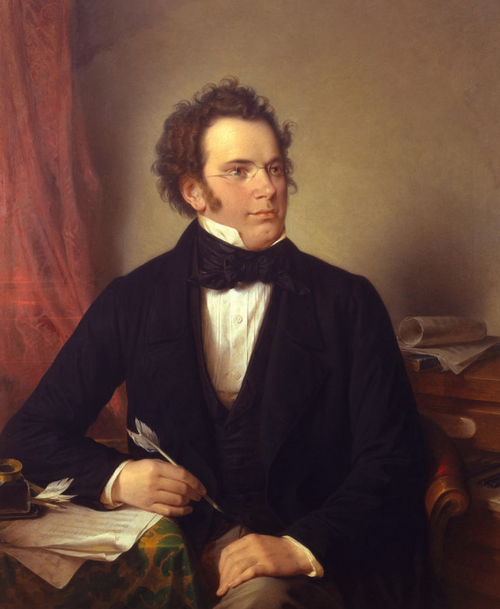
It is one of Schubert’s last works, written in the final months of 1828 for the soprano Anna Milder-Hauptmann, a friend of his, who had asked him for a showpiece capable of ranging across many emotions. Milder did not receive the score until September 1829, through Ferdinand, the composer’s brother, and sang it for the first time in Riga on 10 February 1830.
The text combines verses by Wilhelm Müller, the poet of Winterreise, with others by Karl August Varnhagen von Ense. The clarinet is almost a second singer: it shares with the voice the echoes the shepherd hears from the rock, the central section in G minor, of loneliness and longing, and the ending in B flat major, which heralds the spring. The Catalan soprano Montserrat Alavedra sings it with William McColl, who plays a Mollenhauer clarinet from around 1820, and Joseph Levine, on a copy of a fortepiano from Mozart’s time.
Montserrat Alavedra, William McColl, Joseph Levine
- Duration
- 11 min
- Source
- Pandora Music (ibiblio)
- Archive
- Wikimedia Commons
- Licence
- CC BY-SA 2.0
La soprano Montserrat Alavedra con William McColl (clarinete Mollenhauer de hacia 1820) y Joseph Levine (copia de fortepiano de la época de Mozart); colección Al Goldstein, Open Audio License de la EFF.