Context
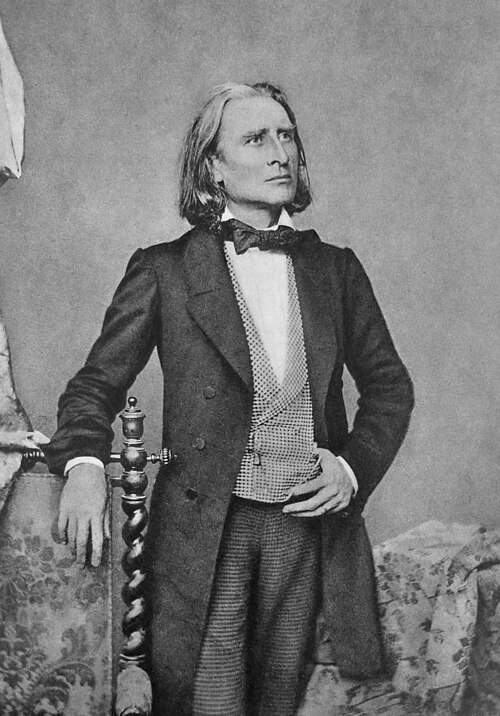
Liszt wrote it between 1852 and 1853 in Weimar and dedicated it to Robert Schumann, who years earlier had dedicated his Fantasie in C major to him. When it was published, in 1854, Schumann was already confined in the asylum at Endenich. Hans von Bülow gave its first performance in Berlin in 1857 and conservative critics, with Hanslick at their head, rejected it harshly.
It is a one-movement sonata of about half an hour. Its three sections can be read at once as the movements of a sonata (fast, slow, fugal and finale) and as the parts of a single great sonata allegro. Almost everything derives from a few motifs set out at the beginning, subjected to the thematic transformation that Liszt used in his symphonic poems. Today it stands at the centre of the Romantic repertoire and is the great precedent for the one-movement sonatas that composers such as Scriabin or Berg would write afterwards.
Jorge Bolet
- Duration
- 27 min
- Source
- Everest Records (1960)
- Archive
- Wikimedia Commons
- Licence
- Public domain (dedication)
From the Everest LP “A Liszt Recital” (SDBR 3064), released in 1960.
Pierre Feraux
- Duration
- 31 min
- Source
- OnClassical
- Archive
- Internet Archive
- Licence
- CC BY-SA 3.0
Left out from the same item are Brahms's Handel Variations, which archive.org holds only in part.