Context
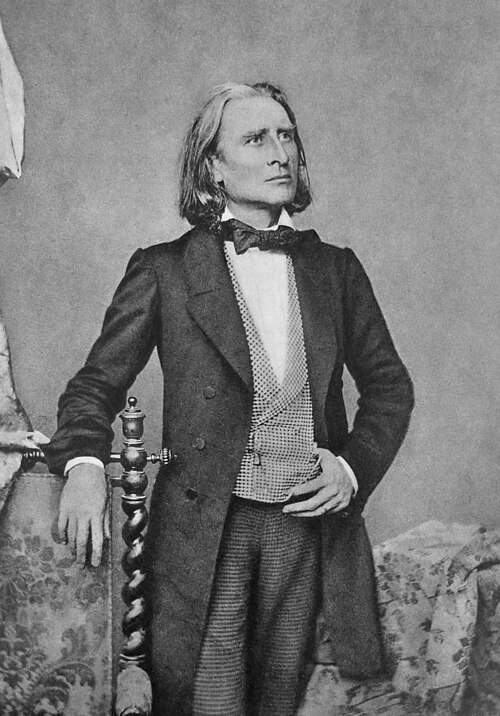
Liszt composed this song in 1860 to a poem by Nikolaus Lenau. The poet comes upon three Gypsies lying under a willow: one plays the fiddle, another smokes a pipe and the third sleeps, his cimbalom hanging from a tree. From them he learns how, when life grows dark, it can be despised three times over: by playing, smoking and sleeping.
Liszt, who considered himself Hungarian and had published a book on the music of the Gypsies of Hungary, gives the piano the turns of the Gypsy bands that he also used in the Hungarian Rhapsodies: free fiddler’s passages, ornaments and sudden changes of tempo. He later arranged it for voice and orchestra and for violin and piano. Here it is sung by the baritones Theodor Scheidl, in 1930, and Heinrich Schlusnus, in 1937.
Score
- Source
- Wikimedia Commons
- Licence
- Public domain
Theodor Scheidl, Franz Rupp
- Duration
- 4 min
- Source
- Onkel Greifenklau
- Archive
- Internet Archive
Grammophon 27203.
Heinrich Schlusnus, Sebastian Peschko
- Duration
- 5 min
- Source
- Onkel Greifenklau
- Archive
- Internet Archive
Recorded on 18 June 1937 (Grammophon 35088).