Context
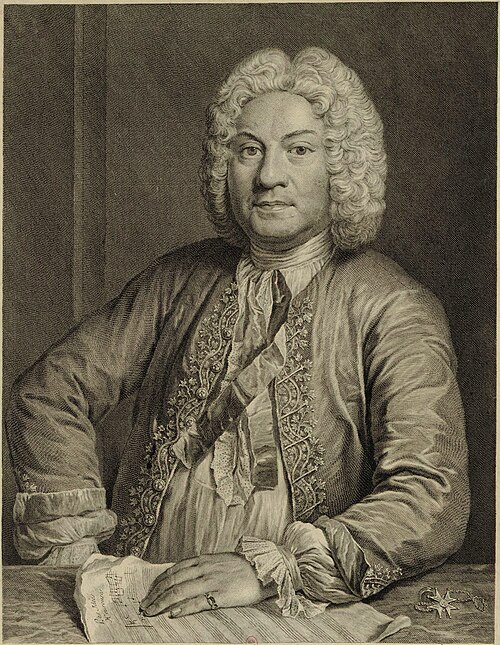
Couperin published the piece in 1717 in his Second Book of harpsichord pieces, as the fifth of the sixth ordre, in B flat major. It is a rondeau, and he never explained the original title, “Les Baricades Mistérieuses”: it has been read as an allusion to the grape harvest, to the masks at a festivity of the Duchess of Maine, or to the suspensions of the music itself, which delay the harmony again and again.
What one hears is the French style brisé, inherited from the lute: four voices overlapping in a continuous flow of tied notes and suspensions, with no melody standing out. Debussy, who saw Couperin as the most poetic of the French harpsichordists, particularly admired this piece.
It is played on the piano by Marcelle Meyer, a pioneer in reviving the keyboard music of Couperin and Rameau in France, in a recording made in Paris between late 1953 and January 1954 for Les Discophiles Français. Wanda Landowska recorded other pieces by Couperin on the harpsichord.
Marcelle Meyer
- Duration
- 2 min
- Archive
- Wikimedia Commons
- Licence
- Public domain (dedication)
Del sexto orden del Segundo libro de piezas de clave. Grabada en la Salle Adyar de París entre finales de 1953 y enero de 1954 para Les Discophiles Français (DF 86); transferencia de la Médiathèque musicale Mahler.