Context
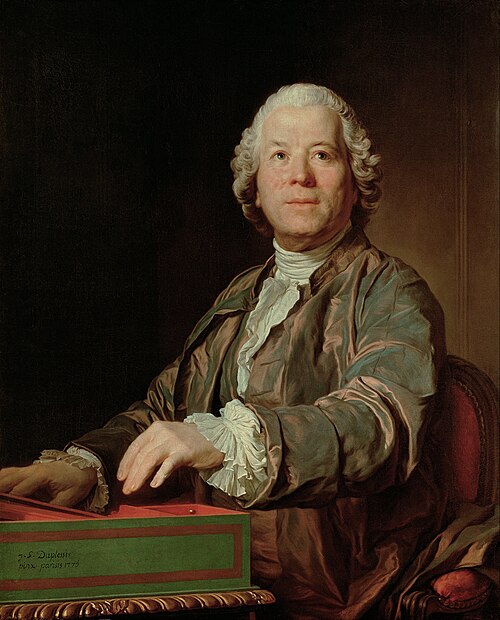
The melody comes from Orfeo ed Euridice, the opera Gluck first staged in Vienna in 1762 and with which he began his reform of the genre: less vocal ornament and more dramatic truth. For the French version in Paris, in 1774, he expanded the Elysian Fields scene with a flute solo in D minor, with a long, melancholy phrase, within the Dance of the Blessed Spirits.
Giovanni Sgambati, a Roman pianist and composer, a pupil of Liszt, transcribed that page for piano under the title Mélodie. His arrangement keeps Gluck’s line in the middle register and wraps it in an arpeggio accompaniment that imitates the sonority of the orchestra. It became an encore piece for pianists of the first half of the twentieth century, who played it as a lyrical contrast at the end of their recitals.
Sergei Rachmaninoff
- Duration
- 4 min
- Source
- Onkel Greifenklau
- Archive
- Internet Archive
CD 5 of the complete Rachmaninoff recordings (RCA), transferred from the original 78s and LPs. Rachmaninoff plays Bach, Handel, Mozart, Beethoven, Chopin-Liszt, Schubert-Liszt, Mendelssohn, Schumann and Paderewski (1925-42).