Context
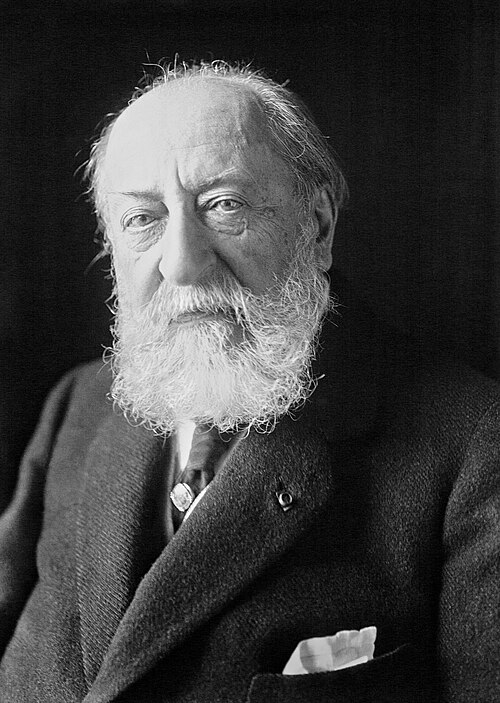
Saint-Saëns began Samson et Dalila with the second act: between 1867 and 1869 he wrote an aria for Dalila and a duet with Samson, and from the beginning he conceived the work as a great love duet against the background of an approaching storm. The opera, to a libretto by Ferdinand Lemaire, found no theatre in France; it was premiered in Weimar, in German, on 2 December 1877 thanks to Liszt’s support, and the Paris Opéra did not take it up until 1892.
“Mon cœur s’ouvre à ta voix” comes when Samson confesses “Je t’aime” to her. Dalila pretends to give herself to him in order to wrest from him the secret of his strength. The verses, in D flat major, lead into the refrain “Ah! réponds à ma tendresse”, and the second time round Samson joins her and the aria becomes a duet.
The mezzo-soprano Germaine Cernay and Georges Thill, the great tenor of the Paris Opéra in the 1930s, recorded the complete duet on 28 April 1933 for Columbia.
Germaine Cernay, Georges Thill
- Duration
- 9 min
- Archive
- Internet Archive
Columbia LFX 310, grabado el 28 de abril de 1933: el dúo completo del acto II en las dos caras del disco.