Context
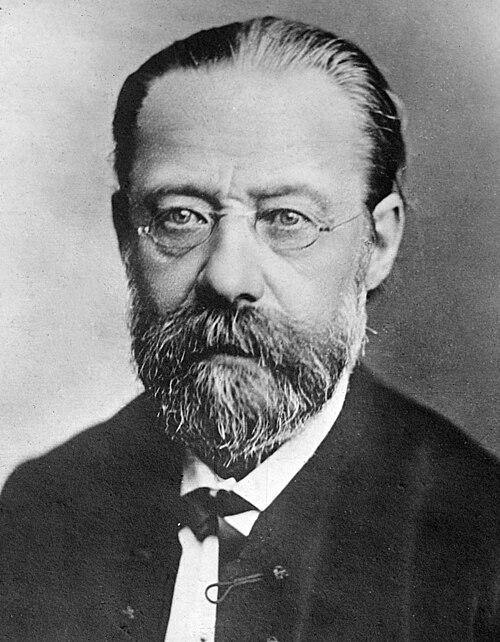
Smetana composed the six symphonic poems of Má vlast (My Homeland) between 1874 and 1879, by then completely deaf, and the whole cycle was first performed in Prague in November 1882. Each piece takes a Czech landscape or legend: the castle of Vyšehrad, the river Vltava (the Moldau) from its sources to Prague, the warrior woman Šárka, the woods and meadows of Bohemia, and the two final poems, Tábor and Blaník, dedicated to the Hussites.
The cycle is bound together by recurring themes: the harp that opens Vyšehrad returns at the end of the Vltava, and the Hussite chorale “Ktož jsú boží bojovníci” underpins the last two poems. Under Austrian rule, the work was an assertion of national identity and became a Czech symbol: since 1952 it has opened the Prague Spring festival every year, which begins on the anniversary of Smetana’s death.
Czech National Symphony Orchestra
- Duration
- 13 min
- Source
- Musopen
- Archive
- Internet Archive
Recordings from the Musopen Kickstarter (2010): Czech National Symphony Orchestra, Musopen String Quartet, Shelley Katz and Paul Pitman. Musopen dedicated them to the public domain worldwide.