Context
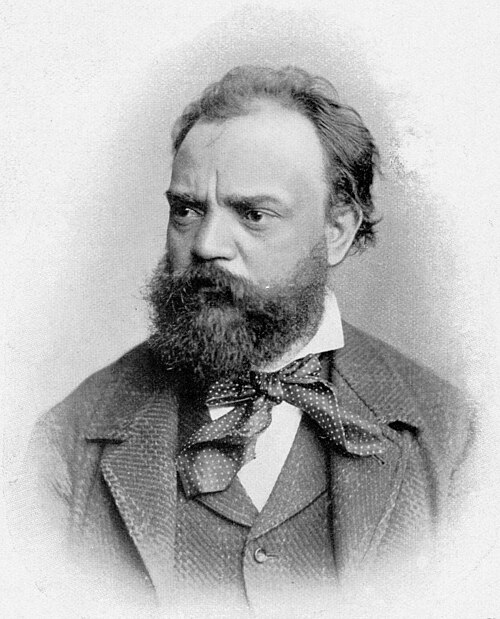
Dvořák spent the summer of 1894 with his family at Vysoká, in Bohemia, in a break from his American years, and there he drew on themes jotted down in his American notebooks for a cycle of eight short piano pieces. He sketched the first on 19 July and finished the score on 27 August; shortly before sending it to Simrock, who published it that autumn, he gave it the title Humoresques.
The seventh, in G flat major, with its dotted rhythm, became one of the most popular piano pieces of its time and circulated in arrangements of every kind, including a jocular American lyric about train lavatories. Mark Hambourg, a Russian-born pianist, a pupil of Leschetizky in Vienna and settled in London since childhood, recorded it in its original version for His Master’s Voice in the late 1920s.
Mark Hambourg
- Duration
- 2 min
- Source
- Emilio's 78 heritage
- Archive
- Internet Archive
His Master's Voice B 2685, matriz Bb 11387-II, de finales de los años veinte. La versión original para piano.